06/06/2026
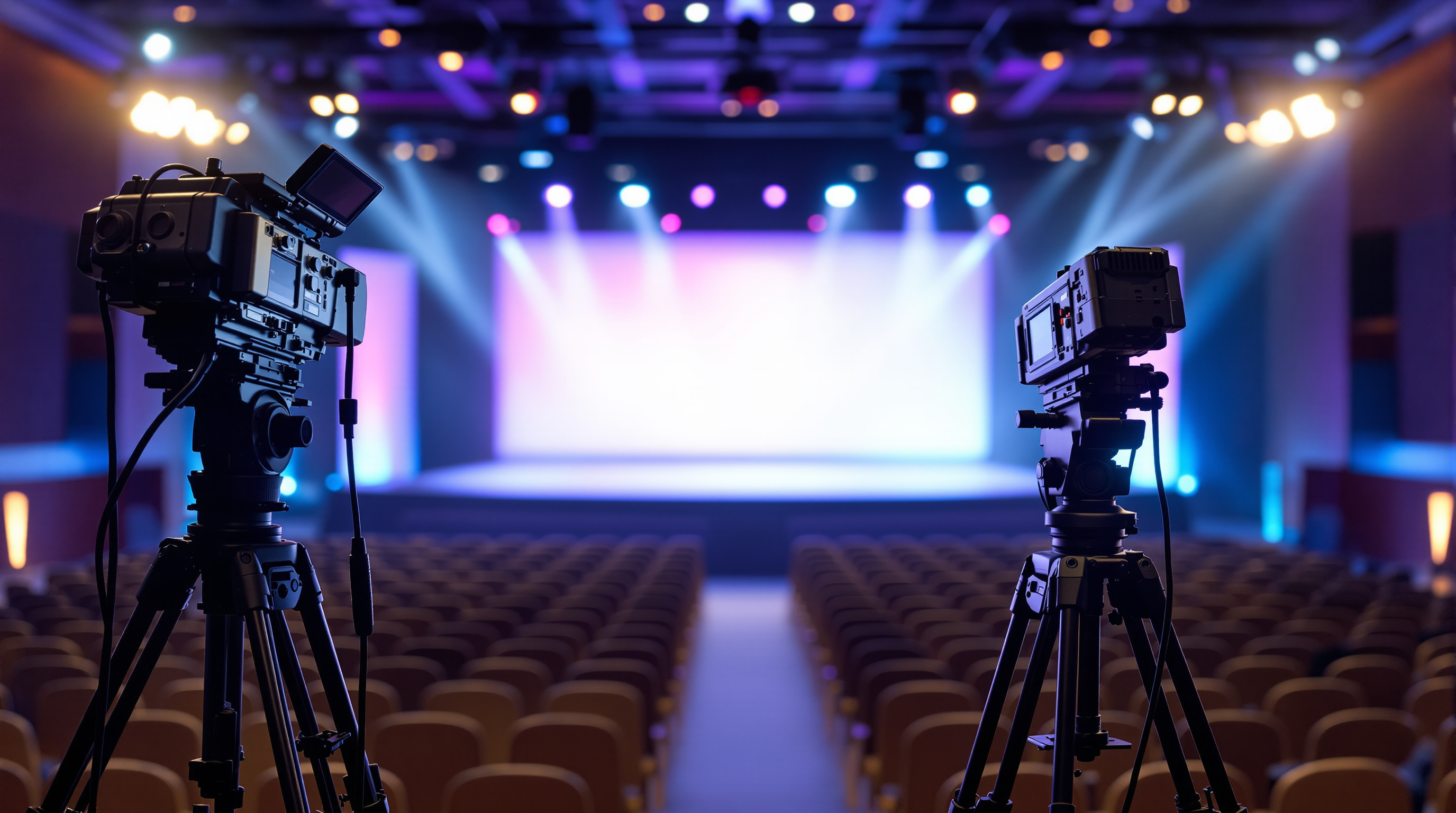
Most conferences record every session, then bury them in a Vimeo folder. Here's why the library dies and how to give it a real distribution surface.
Here's the math nobody at your post-event debrief wants to do. You spent six months planning. You hired a production team for two days. You ended up with 47 session recordings, each one polished, color-corrected, and exported to MP4. Then somebody uploaded them to a private Vimeo folder, dropped the link in the attendee follow-up email, and you all moved on to next year's planning.
Six months later, half those videos have under ten views. The keynote has a few hundred. Everything else? Crickets.
You didn't make 47 sessions. You made a graveyard.
The "we recorded it" trap
Recording a session and distributing it are two completely different jobs, and most conferences only do the first one well. The thinking goes: people who couldn't make it will go watch the recordings later, so we need to capture everything.
But "later" never comes for most attendees, and for non-attendees the recordings might as well not exist. There's no discovery mechanism. There's no schedule. There's no sense of occasion. It's a folder.
What kills these libraries isn't quality — your production looks great. It's the delivery model. Vimeo links sent in a single email are the digital equivalent of handing someone a USB stick of your wedding. Technically you delivered it. Practically, nobody's plugging it in.
What "watch later" actually looks like
The data on video podcasts and on-demand event content tells a consistent story: people consume long-form video on their TVs, not their laptops. They want it in an app that opens on the couch, with a thumbnail grid they can browse, and they want to pick up where they left off when their kid finally goes to bed.
Your Vimeo link in an email doesn't compete with that experience. It competes with Netflix, YouTube, and every FAST channel pre-loaded on the Roku in your attendee's living room. You lose that comparison every time.
The conferences that actually get watched after the fact have figured out one thing: the session library has to live somewhere your audience already opens for entertainment. Not buried inside an event-platform login portal they signed up for once in March.
Two things to do with your recordings that aren't "upload to Vimeo"
Build a branded on-demand library that opens on a TV. Your attendees want to watch the sessions they missed, the speakers they liked, and the tracks they didn't have time for. That experience belongs on a Roku app or an iOS app with your conference's name on it — not your AV vendor's, not a generic event platform's, yours. When someone opens their TV and your conference is sitting next to Netflix, you've changed the relationship from "annual transaction" to "year-round brand."
Branded apps used to be the part where someone said "we'd need an Apple Developer account and six months of dev work." That's no longer true. Platforms like Fluger handle the app publishing under your conference's own name, so you don't need your own developer account and you're not waiting on a custom build. Whether that's the right fit depends on your scale, but the underlying point stands: the technical excuse for not having an app is gone.
Run a 24/7 channel between events. Here's the part most conferences miss. You have 12 months between events and most of your audience's attention is on whoever was talking to them last. A 24/7 channel — looping highlights, full keynotes, speaker spotlights, panel re-airs — keeps your conference in people's feeds and on their TVs all year. It costs you nothing extra to program because the content is already produced.
You're not creating a TV network. You're scheduling a slot in your audience's day. The conference that runs a Tuesday-night "best of last year's keynotes" hour is the conference people remember to register for in March.
The speaker contract problem (real, but solvable)
Before you build any of this, check your speaker agreements. The default contract most conferences use grants permission to record and "make available to attendees," which is narrower than you think. If you want to redistribute sessions on a public channel, an on-demand app, or a 24/7 stream, you need that language explicitly.
Update your speaker contract template now, not later. Make multi-platform redistribution rights the default and offer speakers a per-session opt-out for sensitive talks (medical content, customer case studies under NDA, anything attorney-flagged). Most speakers will sign — they want the exposure. A few won't, and that's fine. You don't need 100% to make the library work.
If you're sitting on years of past sessions with the old contract, just email the speakers. "We want to add your 2024 talk to our streaming channel. Reply YES to grant permission." A two-line email gets you a surprisingly high response rate.
The honest caveat
A branded app and a 24/7 channel won't fix bad content. If your sessions are 50-minute slide-readings recorded with one stationary camera and ceiling-mic audio, no distribution strategy saves them.
But if your production team is already turning out clean, well-shot sessions — and most conferences are at this point — the bottleneck isn't the videos. It's where they live. Moving them out of a private folder and into a real distribution surface is the cheapest 10x your content team will ever ship.
One more honest thing: the audience for a Tuesday-night re-airing of last year's marketing panel is not going to be huge. That's fine. It doesn't need to be. The point isn't reach — it's persistence. People remembering your conference exists in November is worth more than another vanity metric on the keynote video.
Where to start this week
Pull the view counts on your last conference's session library. Sort by views, descending. Look at the bottom half of the list — the sessions nobody watched. Those aren't bad sessions. They're sessions nobody could find.
That's your starting point. Either you build a distribution surface where they can be found, or you accept that two-thirds of what your production team made was for nobody.
The recordings are the asset. The library is the product. Most conferences ship the asset and call it done.
If you want to try the branded-app side of this without a dev team or an Apple Developer account, Fluger offers a 14-day free trial that gets your sessions onto Roku and iOS under your conference's own name. Worth 20 minutes to see what your library looks like as an actual app.