06/07/2026
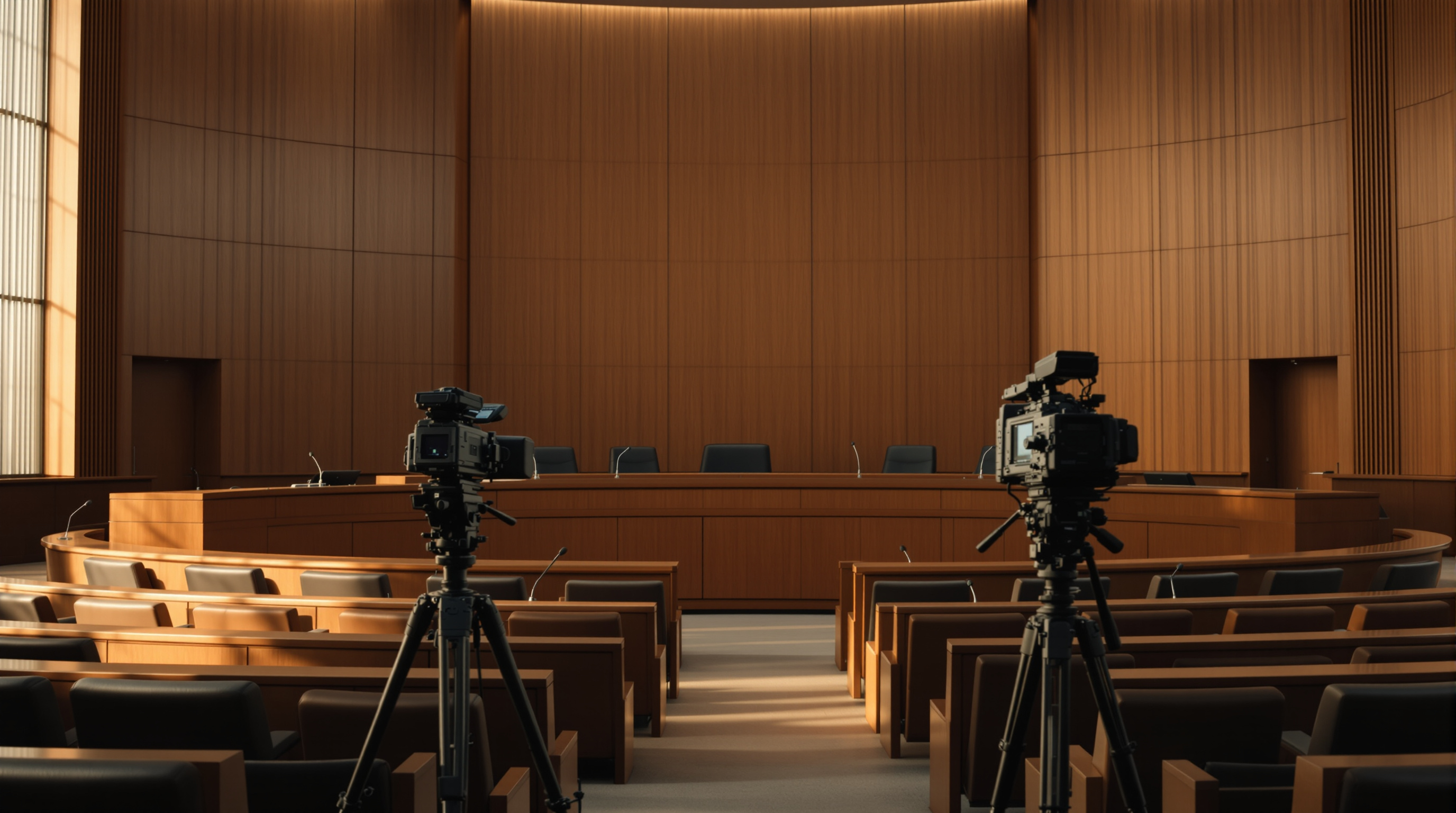
Council meetings are public record. Hosting them on a third-party feed buries the archive and risks losing it. Here's a better civic archive setup.
The water-rate decision your council passed in 2023 is somewhere on Facebook. Probably. If the page wasn't renamed, the video wasn't auto-archived off, the algorithm hasn't buried the post under three years of birthday photos, and the platform still exists in its current form when a resident goes looking.
That's a lot of "ifs" for something the state considers a public record.
Most small cities have the live problem solved. PTZ camera in the council chamber, audio feed from the dais, push to Facebook Live or YouTube. Done. People who want to watch can watch.
The archive problem is the one nobody talks about. And it's quietly worse than the live problem ever was.
The Two Audiences Nobody Differentiates
Live viewers and archive viewers want completely different things.
Live viewers want to watch a meeting happening right now. The video starts when you say "good evening," ends when the gavel falls, and the experience is essentially television.
Archive viewers want a specific thing. A specific motion. A specific public comment. A specific vote count. They are journalists working on a story, residents preparing for the next meeting, attorneys building a case, students writing a paper. They almost never watch the whole video. They want to find six minutes inside three hours.
If your only archive is a Facebook video post from 2023, you are completely failing the second audience. Scrolling through someone's wall is a terrible way to find a budget discussion. There's no search inside the video. There's no agenda overlay. There's no chapter markers. The video probably autoplayed the next thing in the feed, which was a complaint about the snowplow schedule.
This is what most cities call "we stream our meetings."
Why "We Use Facebook" Is a Records Risk
There are governance reasons not to put your only meeting archive on a social platform you don't control:
- The platform decides what your archive looks like. Facebook will, at some point, change how old videos display. Or hide them behind a "see more" button. Or demote them in the page algorithm. You will have no input on this.
- Government pages get locked. It happens. Sometimes from automation, sometimes from coordinated reporting, sometimes from staff turnover and password loss. When it happens, you cannot quickly recover three years of public-meeting video.
- You don't own the recommendation surface. A resident finishing a council meeting on YouTube might autoplay into a political ad, a conspiracy video, or unrelated municipal news from a different state. That's not neutral.
- Embedded analytics belong to the platform. Want to know how many residents watched the rezoning hearing? Facebook will give you a vague number. Your own platform gives you a real one.
For commercial uses, none of this matters much. For records of governance, it's a meaningful gap.
What "Good" Looks Like for Civic Archives
You don't need a six-figure broadcast suite. You need a workflow that produces:
- A clean URL your city controls (yourcity.gov/meetings/2026-06-04)
- Chapter markers tied to agenda items, so people can jump to roll call, public comment, or the specific motion
- The agenda PDF or minutes link visible alongside the video
- A predictable archive page that still works five years from now
- No autoplay into unrelated content
- Captions, because some of your viewers can't hear and some watch on muted phones
That's the baseline. None of these are exotic. All of them are doable by a part-time clerk in an afternoon, once.
The Minimum Viable Upgrade for a Small Town
If your city is on the "we stream to Facebook and call it a day" tier, you don't need to rip anything out. You need to add. Three steps that take one quarter:
1. Keep streaming live wherever you stream it now.
Don't break what works. Facebook reach matters. YouTube notifications matter. Keep them.
2. Mirror the recording to a location your city owns.
After each meeting, the file gets copied to a hosting setup the city controls. That's your record. The Facebook video is a marketing asset.
3. Add three timestamps.
Even three lines under the video — "0:00 Call to order, 0:42 Public comment, 1:18 Budget discussion" — turns an unsearchable blob into something a resident can actually use. It takes the clerk five minutes after the meeting.
That's the floor. Cities that nail this look light-years more transparent than cities with twice the budget but no archive strategy.
The 24/7 Channel Nobody Thinks of for Civic
Here's an underused move: once you have an archive your city owns, you can run a 24/7 channel that rotates the last month of meetings in chronological order. A resident who turns on the TV at 4pm on a Wednesday lands in the middle of something — a planning commission, a council session, a school board.
It's wallpaper-level civic engagement, and it costs almost nothing once the archive exists. The footage is already produced. Scheduling it on a loop is a Tuesday afternoon project.
This is also where a platform like Fluger starts to matter for civic users. The pitch isn't "free streaming" — Facebook already does that. The pitch is a branded streaming app under your city's name, on Roku and iOS, where the archive lives and the 24/7 channel runs. No Apple Developer account to manage. No automated content blocks if your community arts night uses a song that triggers a social platform's audio-matching system. Your city's name, your city's URL, your city's record.
The Quiet Reason This Matters
The trust gap between local government and residents widens every year. Most of that is national. A meaningful chunk of it isn't.
When a resident hears something on the news, they sometimes want to check the source. If "the source" is your archived council meeting, and finding it requires scrolling through a Facebook page or guessing a YouTube playlist date, you have lost them. They go back to the article. They take the article's word for it.
When the source is one click on yourcity.gov and a chapter marker at 1:43, you have given them something better than a platform-mediated guess. You have given them the record.
That is not a luxury for big cities. It is a baseline civic-tech move that small cities can absolutely do.
If you are running streaming for a town, county, school district, or special district, and your archive is currently parked on someone else's platform, take a look at fluger.tv/registration — 14-day free trial, no card required to see what a branded civic channel feels like.