07/05/2026
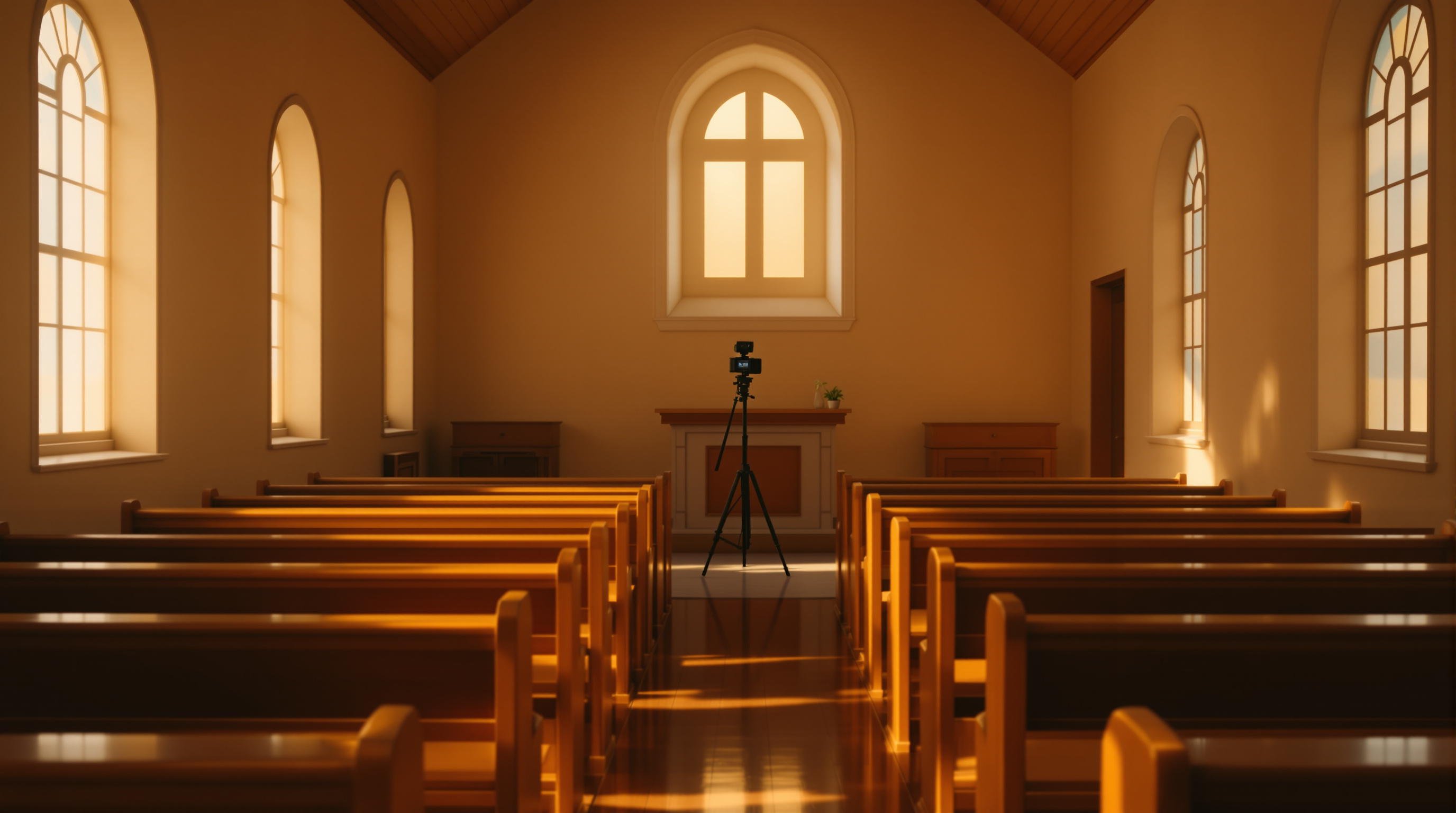
Memorial services get rewatched by distant family for years. Publish them off YouTube so hymns are not muted, ads do not run over the eulogy, and grandma does not see a Progressive commercial mid-service.
A grandmother in a nursing home in Ohio opens her tablet to watch her son's memorial service. Her church family in Georgia set up the livestream on YouTube. She loads the video and hears the pastor say, "Please turn with me to First Corinthians thirteen." Then a Progressive Insurance ad plays.
That happens every week to somebody, and it's not a scandal or a screw-up. It's what YouTube does with the video you handed it.
The funeral livestream is one of the most consequential pieces of content a church will ever put on the internet, and most churches are still treating it like a Wednesday night Facebook Live. It shouldn't sit next to a Boiler Room reaction video in a recommendation feed. It shouldn't get muted because a congregant sang "Amazing Grace." It shouldn't disappear into the church's YouTube channel a month later, three scroll-flicks past the youth mission trip highlight reel.
The families rewatching that video are going to rewatch it for years. The church that produces it should think about it that way.
The memorial video is the most rewatched thing the church will ever produce
Ask any church admin who runs the streaming setup which video gets the most repeat views months after it aired. It won't be the Easter service. It won't be the pastor's best sermon. It's almost always a memorial from six months back that still shows steady views in the analytics, and if you look at the geography, the views are coming from cities and towns the deceased hadn't lived in for forty years.
That's a niece in Portland who couldn't fly out. A college roommate in Tampa. A distant cousin who saw the obituary on Facebook. Nursing home residents whose adult children queue the video up on the room TV. The audience for a memorial expands over time, not contracts, and the video keeps getting shared long after the service ended.
Now imagine what those viewers see. On YouTube, they see mid-roll ads. They see thumbnails in the sidebar for whatever the algorithm thinks they want next. They see comments turned on by default unless someone remembered to disable them. They see a subscribe button and a like counter, both of which feel deeply wrong on a video of a eulogy.
None of this is malicious. YouTube is a video hosting service optimized for engagement and ad revenue. It works exactly as designed. The mismatch is that the church put a memorial service into a system built for entertainment content and the system did its job.
ContentID mutes hymns because it doesn't know the difference
Every funeral has music. Congregational hymns, a soloist doing "It Is Well," a family favorite piped in from a phone. Every one of those can trigger a ContentID match on YouTube, Facebook, and Instagram.
The catalog behind ContentID is enormous. It contains recorded versions of nearly every traditional hymn, every gospel standard, every worship song written in the last thirty years. When the algorithm hears your congregation sing "How Great Thou Art," it does not think "public domain hymn sung by a small church." It thinks "possible match to Carrie Underwood's recording, mute this segment or run the ads through her label."
The result at the family end is not usually an immediate takedown. It's more insidious. The audio mutes for two minutes during the exact hymn the family requested because it was Grandma's favorite. Or the video plays fine live, and then three days later the church admin gets an email that monetization has been claimed by a music label, and the family is now unknowingly helping fund somebody else's royalty stream.
You cannot license your way out of this on a platform that runs automated audio matching against every livestream. The only reliable fix is to not run the stream through a platform that filters audio at all, which means running it through infrastructure the church controls.
Family privacy is different from public livestream privacy
Regular services are, by design, public. A Sunday morning livestream is evangelism, or at least outreach. You want people to find it. You want the shareable link, the searchable video, the algorithm putting it in front of the right person.
Memorial services are the opposite. The link is meant for a specific list of people. The video, once posted, is meant to be findable by the family but not surfaced to strangers. Comments should be off, or restricted, or moderated. The whole tone of the surrounding interface should be quiet.
YouTube has an unlisted setting, and Facebook has some privacy controls, but they're solving a different problem. They're trying to let a public account share private content occasionally. What a church actually wants is the opposite: a channel that's private by default for this kind of content, with clean, dignified framing around every video, and no path from the memorial video to unrelated content.
The good news is that if the church already has a place for its regular services that isn't a public social platform, memorial services fit into that same infrastructure with a private section, an unlisted link, or a family-only category. The bad news is that most churches don't have that place, so the funeral defaults to YouTube on the day of the service because there's nowhere else to put it.
What a dignified setup actually looks like
The specifics vary, but the shape is similar across churches that get this right.
A dedicated section for life events. Not mixed into the main sermon feed, not appearing on the app's home screen. A section the family gets a direct link to, with the deceased's name on the video, the date of the service, and nothing else. No related videos, no algorithm, no ads.
Music that stays intact. Because the stream and the archived video are running through infrastructure the church controls, hymns don't get muted mid-service and licensed worship music doesn't trigger monetization claims. If the family requested a specific song and paid the licensing, it plays.
A link that's private enough to share and stable enough to keep. The nursing home in Ohio can bookmark it. The distant cousin gets it from the family group text six months later and it still works. The video isn't going to get algorithmically buried, monetized, or repurposed.
Clean, branded framing. The video plays under the church's name, on the church's app or website, with the church's branding around it. Not a YouTube frame with recommendations for reaction videos. Not a Facebook feed with birthday notifications underneath.
None of this is exotic. It's what most families would assume the church already has. When they find out it doesn't, they're not usually angry. They're just quietly disappointed that grandma's memorial ended up on YouTube because that was the only tool the tech volunteer knew how to set up.
What we build for at Fluger
Fluger runs branded streaming apps and channels for churches that need their own place on Roku, iOS, and the web to publish services, sermons, and life events under their own name, without needing an Apple Developer account. For memorial services specifically, that means a private section of the app the family gets a direct link to, no ads, no ContentID muting on hymns or licensed music, and a stable URL that keeps working for years.
If the church has been telling grieving families "the video is on our YouTube channel, just search our name," that's usually the workflow worth changing.
Setting this up doesn't require a full rebuild. Most churches start by moving just the special-occasion content to a branded channel and leaving Sunday morning on whatever platform it's already on. That alone changes what families see when they open a memorial link two years later.
Free trial and setup: fluger.tv/registration.