07/04/2026
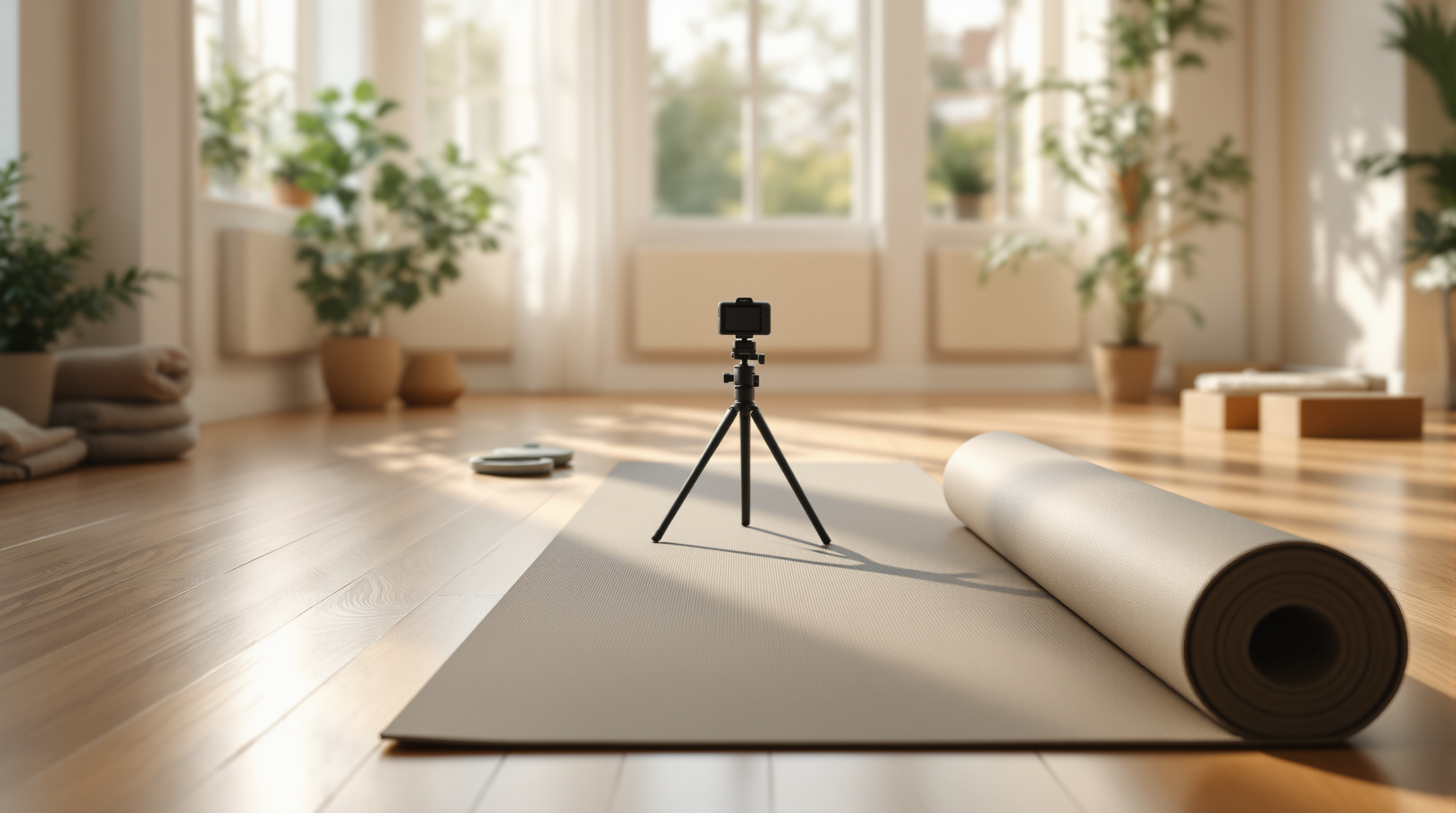
Home viewers get muddy audio, awkward angles, and cues meant for the room. Fix it by designing streaming as a separate product, not an afterthought.
Your studio's 6:30 AM Vinyasa is the best class of the week. The room is packed, the playlist is dialed in, the teacher is on. You point a camera at it, push the RTMP button, and stream it to your members at home.
Three people watch. Two of them tap out after 12 minutes.
You blame marketing. Or the app. Or the internet.
It's usually none of those. It's that the class you built for a room full of people is a bad product for a person watching alone on a laptop, and no amount of promotion fixes that.
The class was designed for a room, not a screen
Walk through what an in-studio class actually is: a teacher who cues from the front, a playlist that fills the space, and thirty bodies whose collective focus creates the energy that keeps the class moving. That whole product exists because everyone is in the same room breathing together.
Now cut the home viewer into that. She's on a mat wedged between her couch and the coffee table. The ceiling camera catches the teacher's back for half the class. The room mic picks up the front row's breathing louder than the cues. When the teacher says "look around the room, notice the community," she's looking at her ficus.
She didn't get a worse version of the class. She got a different product entirely, one that wasn't designed.
Three things break when you send the room to the screen
Audio is the biggest one. A room mic is optimized to capture the teacher over ambient noise so people in the back can hear. On a livestream, that same mic sends every squeaky mat and shuffled block straight into the home viewer's headphones, and the teacher sounds like she's talking from across a warehouse. Members mute the audio and lose the cues, which means they lose the class.
Camera angles are the second. In-studio, the teacher faces the class, walks the room, adjusts individuals. On camera, that means the viewer at home gets a lot of back-of-head and a lot of profile. Occasionally the teacher will demo a pose, and only then does the framing work. The other 45 minutes are visually confusing.
Cueing is the third and least obvious. Good teachers cue to the room they're in. They read the class, slow down when everyone's shoulders are tight, add a modification when they see three new faces. The home viewer never gets that read. She gets whatever the room needed, which almost never matches what she needs.
Everyone at home is a beginner as far as the stream is concerned, because the teacher can't see them.
The playlist problem nobody talks about
Music is half the reason your Vinyasa class works. It's also the fastest way to kill your stream on the platforms you were probably planning to use.
Instagram, Facebook, and YouTube run automated copyright detection on every livestream. It doesn't matter if you paid for the music, licensed it through your MindBody integration, or bought the CD in 1998. If the algorithm hears a match, it mutes your audio, cuts your stream, or takes the video down after the fact. Yoga and fitness classes get flagged constantly because instructors curate exactly the kind of recognizable, mood-driven music that trips the filter.
Your two options on those platforms are: strip the music (kills the class), or license a royalty-free playlist (also kills the class, because members joined for your teacher's taste, not a generic ambient loop).
The fix is running the stream through a platform that doesn't do ContentID filtering at all, which basically means running it through your own channel infrastructure instead of piggybacking on a social platform. That's what a branded streaming app gets you, and it's why the "just stream to Instagram" approach falls apart the moment your instructor cues to Fleetwood Mac.
What actually works for the home viewer
Once you accept that the streamed product is different from the in-studio product, the fixes get concrete.
Dedicated streaming classes. A teacher on a mat, in a quiet room, cueing to a camera. Shorter than the studio class, usually 30 to 45 minutes. Music that clears rights or comes from a curated licensed library. The teacher demos every pose because there's no room to walk. It looks less like a class and more like a shot instructional video, because that's what it is.
Edited VOD from your studio classes. Take your best in-studio class, capture the wide shot and a lav on the teacher, then cut it down. Add a title card, chapter markers by section, and a cleaned audio track. This is more work than a livestream, but each class becomes an asset that sells for months.
Live only for community moments. Keep the live stream for the events where the shared-time factor is actually the point: a Saturday sound bath, a New Year's intention class, a workshop with a guest teacher. Members show up live because being live matters. For the daily grind of "I want a 45-minute Vinyasa at 7pm," on-demand wins every time.
The mistake is trying to make one asset serve both audiences. Studio members get the in-person class. Home members get a product built for them. Neither is a compromise.
What we build for at Fluger
Fluger runs branded streaming apps for organizations that need their own channel on Roku, iOS, and the web, under their own name, without needing an Apple Developer account of their own. For fitness and yoga studios that means a 24/7 channel scheduling your live and dedicated streaming classes, a VOD library organized by your programming (not by Netflix-style algorithm buckets), and a live stream path that doesn't get muted the second an instructor cues to a licensed track.
If you're on your third livestream platform this year and members still can't find the class they want, that's usually the problem worth solving.
Studios building their streaming product deliberately, instead of pointing a camera at the room and hoping, keep members through month two and beyond. That's usually where the churn shows up, and it's rarely because members lost motivation. It's because the product they were paying for stopped serving them.
Free trial and setup: fluger.tv/registration.