06/05/2026
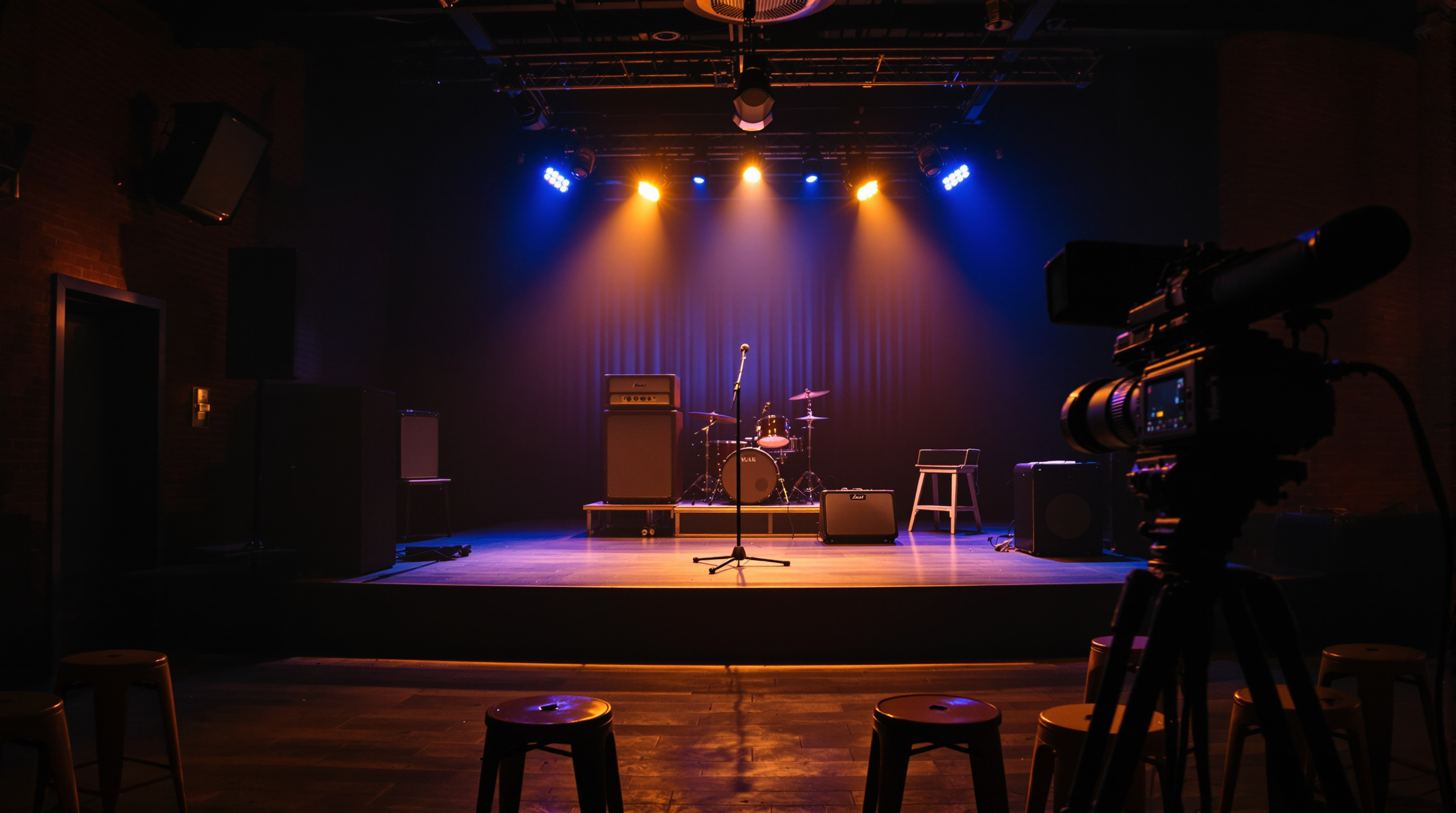
Most indie venues discover streaming rights the worst way: a week before show night with the tour manager saying no. Build the conversation into the booking email instead.
Most indie venue owners discover streaming rights the worst way possible: a week before show night, with the tour manager on the phone saying "actually, no." By then you have already promised your regulars an overflow stream, your bartender has rebuilt the schedule around the camera setup, and there is no clean way to back out without burning trust.
The fix is not a better lawyer. It is a conversation you have one minute earlier — before the contract goes out. Streaming rights are not the kind of detail you can bolt on later. Build them into the booking conversation the same way you handle door splits and load-in time, and the whole thing stops being a fight.
Why "we will figure it out later" never works
Live performance and a recording of that performance are two different legal animals. A live performance is a public performance — covered by the PRO licenses your venue probably already pays for. A recording is a fixation, which pulls in reproduction rights, sync rights, and a separate publisher conversation. A livestream is technically a public performance, but the moment you save the file or offer replay, you have crossed into the second category.
Touring artists know this. Their managers know it. What they do not know is what you specifically want to do — stream to a closed audience, stream live and then delete, archive for paid replay, build a permanent VOD library. Each of those needs a different answer from the artist's side, and "we will figure it out later" gets a default no because it is the safe answer for them.
The artists who do say yes are usually saying yes to a specific request. Vague yeses do not exist in this conversation.
The four questions that go in the booking email
Stop framing this as a rider negotiation. Frame it as four yes-or-no questions you ask alongside the offer. Most artists answer them in a single reply.
- Can we livestream the full set to a paid audience on our own platform? Not YouTube — your platform. Most artists are far more comfortable with a venue-owned stream they can see and limit, versus a stream that lives on the open internet forever.
- Can we keep the recording available as paid replay for 72 hours after the show? This is the magic window. Long enough that fans who heard about the show on Monday can still buy in. Short enough that the artist's tour manager does not feel like you are competing with the eventual live album.
- Can we geo-restrict the stream to the United States only? Or your country, whatever applies. International rights are where most refusals come from, because label deals carve up territories. If you offer to geo-fence first, you eliminate the most common reason for a no.
- What is the artist's split of the streaming revenue? Have a number ready. Fifteen percent of net is a reasonable starting place for a 200-cap room. Twenty for a co-headliner who is already drawing.
That email gets answered. The "is it okay if we stream?" email does not.
The cover song trap nobody warns you about
If the act on stage tonight plays cover songs — and most do, even the originals-heavy ones tend to slip one in for the encore — you have a problem the booking conversation will not solve. The PRO license that covers live performance in your venue is not the same as the streaming license YouTube or Facebook holds. And YouTube and Facebook handle this for themselves by automatically muting copyrighted audio in real time. Their ContentID system does not care that you have a license. It mutes the song and moves on.
On your own platform, you are responsible for the streaming rights for the underlying composition. ASCAP and BMI sell webcasting licenses that cover this — they are not expensive at the small-venue scale, and they are separate from the live-performance license you already have. Budget for one. It is the difference between a stream that runs clean for two hours and one that gets stripped of audio at the worst possible moment.
This is also why a venue-owned platform beats YouTube for live music. Your stream does not get automatically muted because the headliner closed with a Springsteen cover. You actually got the rights for that. The platform should respect them.
What goes in the rider after they say yes
A handshake yes is good. A clause in the rider is better. Keep it short — one paragraph, no twenty-page addendum:
Venue is permitted to livestream the full performance to a closed, paid audience via Venue's branded streaming platform. Stream may be available as on-demand replay for [X] hours following the performance, after which all files will be deleted from active distribution. Stream is geo-restricted to [country]. Artist receives [X]% of net streaming revenue, calculated and paid within 30 days of show date. Final recording subject to Artist review and removal request for technical or performance reasons within 14 days.
That last clause matters more than the rest. The single biggest reason artists refuse stream rights is fear of a bad-night recording living forever. Give them an out — a window where they can pull the file if the monitor mix collapsed in song three — and you remove the last objection. Most never use it.
The setlist conversation that takes 90 seconds
Tour managers love this part because it is the only piece of streaming rights that costs them nothing. Before the show, ask: are there any songs the artist would prefer not to be in the stream? Maybe a debut they are not ready to release publicly. Maybe a cover they cannot clear. Whatever.
Build your stream so you can cut to a static slate on those songs, with audio off. The audience in the room hears them. The stream audience sees a "next song coming" card for three minutes. Everybody wins, including the lawyer who never had to be involved.
This kind of selective broadcasting is easy on a stream you control and effectively impossible on a public platform. It is one of the quiet reasons venues with their own apps end up booking acts that would never sign off on a YouTube Live.
Building the platform before the conversation matters
All of this presumes you have a platform to point at when the booking agent asks "stream to where?" The answer cannot be "our YouTube channel." The whole conversation falls apart at that point, because YouTube is exactly what the artist's label does not want.
A venue-branded streaming app — your name on the icon, your colors, your paywall, your geographic controls — changes the conversation. It is the same answer a festival gives. The only difference is that festivals used to need a custom development budget and an Apple Developer account to ship one. They do not anymore. Fluger ships branded Roku and iOS apps under your venue's name with none of that overhead, and there is a 14-day free trial if you want to have a real platform to point at on the next booking call.
The streaming rights conversation is so much easier when "where does the stream live" has a clean, single-sentence answer. Build that first. Then have the conversation.