06/15/2026
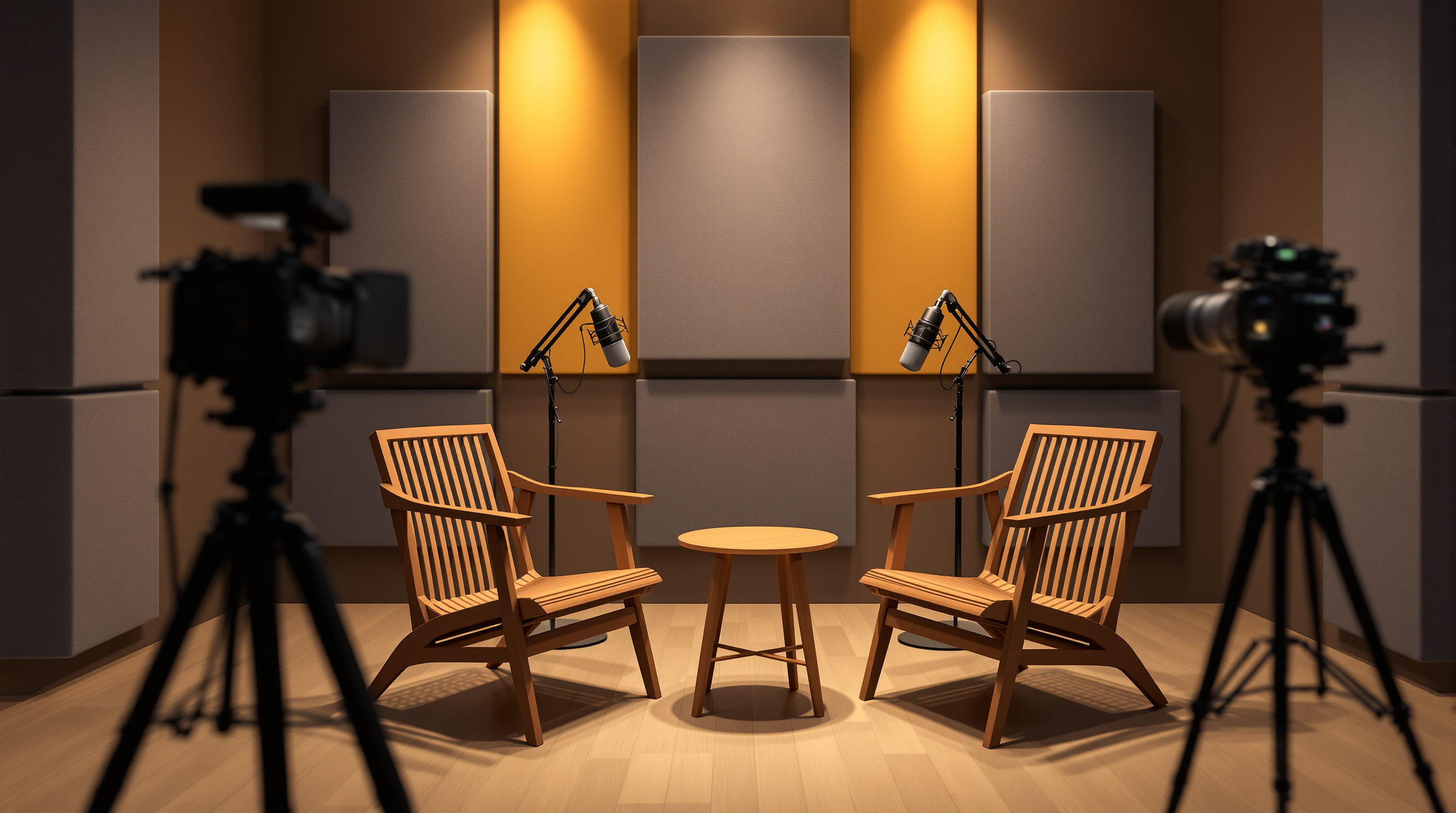
Podcasts already produce for audio listeners and YouTube watchers. A third audience - the lean-back, connected-TV crowd on Roku and Apple TV - is being ignored. Here is the math, the trade-offs, and how a branded streaming app turns a podcast catalog into a TV channel.
Most podcast hosts know exactly who they are producing for. They have thought about the commuter listening on Spotify and the office worker watching a clip on YouTube. They have a workflow for both. They have already had the audio-vs-video debate, made peace with it, and moved on.
What they have not thought about is the third person. The one in the living room at 9 PM who turned on the TV out of habit, did not feel like committing to a movie, and is willing - eager, even - to watch ninety minutes of two people talking about something interesting. That audience does not open Spotify on their phone. They do not search YouTube. They pick up a Roku remote and they scroll.
You are not on the Roku remote.
The math nobody quotes you
YouTube and Spotify have been at war for the podcast listener for three years. Most of the published numbers come from those two companies and look like a horse race. The number that does not make it into the press cycle is the connected-TV one: roughly a third of US viewing now happens on TV streaming apps, and the demographic of that viewing skews older, longer-session, and more couch-bound than YouTube watching does.
For most podcasts that means a very specific user: someone who would love to listen to your show but is not going to put earbuds in to do it. They will watch in the background while their partner does sudoku, they will leave it on while they are making dinner, they will fall asleep to your voice three nights a week. They are loyal in a way short-form viewers are not, and they are completely absent from your stats.
There is nothing wrong with your podcast. It is just not findable on the device they actually use.
"Just put it on someone else's TV app"
Every host considering this hits the same wall. The obvious answer is to apply to be on a streaming service that already exists - a podcast network, a discovery app, somebody else's channel. The problem with that path is the same problem podcasters have on every platform that is not their own: you become a tile inside someone else's experience.
Your show ranks against other shows you do not want to be ranked against. Your branding disappears under the platform's logo. Your direct audience relationship is mediated by a recommendation engine that does not owe you anything. If the platform decides to deprioritize talk shows next quarter, you find out via a chart that is quietly trending down.
This is the model podcasters used to escape by going independent. Buying back into it on TV does not fix the problem. It ports it.
What a branded TV app actually looks like for a podcast
The alternative is the one most podcasters do not realize is on the table: a streaming app under your own name. On Roku. On iOS. With your logo on the home screen, your show as the primary content, and your back catalog as a 24/7 channel that plays your episodes on a loop in the background.
This is not as exotic as it sounds. The technology has been around for a few years. What has changed is that you no longer need to be a TV network to do it. You do not need an Apple Developer account on your side - the platform handles app publishing under your brand. You do not need a developer to build a Roku channel; that gets handled too. What you need is a name, a logo, and a back catalog.
For a podcast with 200 episodes, that is already 200+ hours of content. Set it on a loop, add a now-playing overlay, and you have a TV channel. People who like your show open your app, hit play, and let it run. They watch the same episode three times. They discover an episode from 2022 they missed when it dropped. They tell a friend.
The economics are not heroic. The cost of running a branded streaming app is in the realm of a moderate hosting bill, not a TV-network budget. You are not buying transponders.
What changes when you have your own app
A few things stop being problems.
Ad rules stop being someone else's call. YouTube can demonetize your episode about a controversial topic. Spotify can decline to recommend it. Your own app does neither. You read the ad, you keep the revenue, you sleep fine.
The "do we publish video?" debate ends. You publish whatever you record. The same episode goes out as an audio podcast, a YouTube clip, and a TV-app full-length play. Different formats for different audiences. The video gets reused on the TV side. Nothing is thrown away.
Subscriber-only content makes sense. A premium tier on a TV app is a very natural sell. People are used to streaming subscriptions; they are used to paying for premium content on a Roku channel. Patreon-style support translates more cleanly to "subscribe to my channel" than it ever did to "support me on a website you bookmarked."
The audience stays yours. When a listener wants to share your show, they share your app - not someone else's link. That is a meaningful difference five years from now. You are not renting an audience you will keep paying for the rest of your career.
The honest caveats
You will not be discovered on a Roku app the way you are discovered on YouTube. There is no algorithm. There is no autoplay rabbit hole leading viewers to your show from somewhere else. Your TV app is a destination for fans who already know you exist. If your podcast does not yet have a couple of thousand engaged listeners, the TV-app strategy is premature - there is nobody to point to your channel yet.
You will also need to think about your catalog as a programming grid rather than a feed. If a viewer turns on your channel at 3 PM on a Tuesday, what plays? You are not running an audio podcast feed where they pick the episode - you are running a TV channel where the channel picks. That is a new muscle. Most podcasters discover they enjoy it.
And there is the obvious one: you have to actually have video. If you have been recording audio-only this whole time, you do not suddenly have a TV show. The path forward is to start recording video now, run your audio catalog as audio-with-cover-art in the meantime, and let the video library accumulate. A year of new episodes in video gets you to a real channel.
How to think about whether this is for you
If your podcast has a few thousand regular listeners and you are recording video already, this is overdue. You are sitting on a TV channel you have not built yet. The audience exists. The catalog exists. The technology to wrap your name around it exists.
If you do not have video yet but you have a dedicated audience, start recording video this month and circle back in six months. The episodes you record this fall are next spring's TV catalog.
If you are not on Spotify or YouTube yet, finish those first. The Roku/iOS branded app is the layer above; the layers below have to work first.
Fluger builds those branded Roku and iOS apps for podcasts and small media properties - your name on the home screen, your episodes as the 24/7 channel, no Apple Developer account on your side. There is a 14-day free trial at fluger.tv/registration if you want to see what your show looks like as a TV channel before deciding whether it is worth the move.
Your third audience is already sitting on a couch with a remote. They are not coming to your podcast. The question is whether you are going to put your podcast somewhere they can find it.