07/03/2026
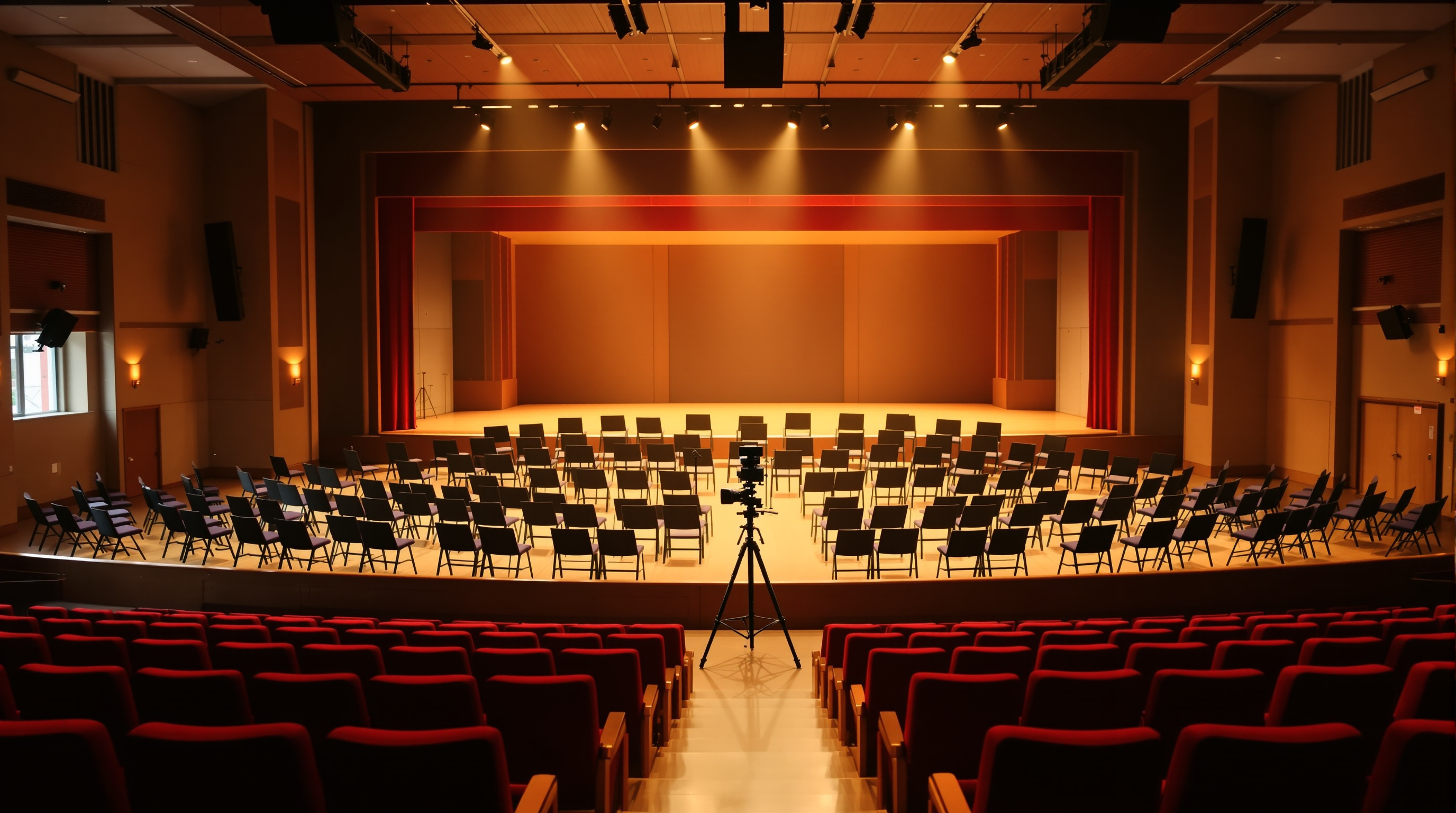
K-12 fine arts programs license their sheet music, pay the PROs, and still get their concert livestreams muted by YouTube ContentID. Here is why it happens, why it hits arts programs harder than sports, and what a branded district streaming channel changes.
The band director paid ASCAP. The choir director bought the sheet music from a licensed publisher. The theater program paid MTI for the rights to the musical, plus the per-performance royalties, plus the streaming rights add-on. Every piece of paper is in order.
The winter concert goes live on YouTube. Fifteen minutes in, the audio drops out. A gray notice slides across the stream: "This video has been muted because it may contain copyrighted material." The grandparents watching from three states away are staring at a silent orchestra.
This happens constantly at K-12 schools, and it's not because anyone did anything wrong. It's because YouTube's ContentID system doesn't know or care what license you bought. It hears the melody, matches it to a commercial recording in its database, and mutes the stream — or worse, terminates it mid-performance.
For a school with a fine arts program, this is a bigger problem than most administrators realize. And it's fixable.
The mismatch between what schools pay for and what platforms honor
Schools license music through a few different channels depending on the program.
The band and orchestra pay per-performance royalties or fall under school-district blanket licenses with ASCAP, BMI, and SESAC. The choir program buys sheet music from licensed publishers, which comes with performance rights for the school year. The theater program licenses productions through Music Theatre International, Concord Theatricals, or Dramatic Publishing, often with an additional streaming rights fee that runs a few hundred dollars per production.
None of that shows up when YouTube's system scans your livestream audio. ContentID compares what it hears against a fingerprint database owned by the recording labels and rights holders who submitted their catalogs. If your seventh-grade orchestra plays a passable arrangement of "The Great Gate of Kiev," ContentID matches it to the London Symphony's recording of Mussorgsky and issues the strike. Your school didn't license the London Symphony's recording. Your school licensed the sheet music. That distinction is invisible to the algorithm.
The takedown notice can be disputed, but only after the stream ends — the muting or termination is automatic and real-time. By the time you win the dispute six weeks later, the concert is over and no one remembers it.
Why this hits school arts programs harder than sports
A basketball game livestream almost never gets flagged. There's no copyrighted audio to trigger it. School athletics streams flow cleanly through YouTube and Facebook Live because the only sound is a whistle, a crowd, and a commentator.
Fine arts programs are the exact opposite. Every note performed is potentially fingerprintable — orchestra pieces, band arrangements, show choir mashups, musical theater numbers. And these are the events that families most want to watch, because they only happen a handful of times a year. The spring band concert. The one-act play. The middle school musical.
The result is a strange inversion of what schools stream: sports get a professional-looking archived library on YouTube, and the arts programs get muted streams, corrupted archives, and frustrated parents. That's exactly backwards from where the emotional value sits.
What "just use Facebook Live instead" gets you
Facebook has the same problem. Its Rights Manager system runs the same kind of match against commercial recordings. Choir directors have watched their spring concerts get muted mid-song on both platforms in the same week.
Some districts have tried to work around it by uploading concerts unlisted after the fact and hoping ContentID doesn't scan post-hoc — it does, and eventually strikes hit the district's account. Others have moved to third-party school-streaming platforms like Resi, YoloCast, or On The Stage, which don't run ContentID and solve the audio problem but leave you as one district among thousands on a shared vendor URL. The event ends up at watch.someplatform.com/districts/yourdistrict-hs instead of somewhere that belongs to your school.
For a lot of districts that's fine. For a district that has spent a decade building brand identity around its performing arts program — hallways full of trophies, parent-funded uniforms, a marching band that's the pride of the town — the vendor URL feels like renting when you should own.
What a branded arts channel actually looks like
Some districts have started publishing their concerts, plays, and musicals through their own Roku channel and iOS app. When a grandparent in Florida wants to watch her granddaughter's flute solo, she opens the Springfield Schools app on her Apple TV. Same app the district uses for board meetings and graduation. Same navigation, same branding, no ads for other districts, no confusion about which platform to open.
There's usually a Live tab that lights up on concert nights, a Fine Arts tab that archives every performance from the last three years, and a Sports tab for game footage. The whole thing is under the district's name, not a vendor's.
A few practical things to know if you're considering this route:
The audio problem goes away. If the platform isn't running ContentID against your stream, it can't mute you for playing licensed music. You're still responsible for the licensing itself — the school still buys the sheet music, still pays the PROs, still gets the streaming rights from MTI. But you don't get punished for being legal.
You don't need an Apple Developer account. The old model — a district paying $99/year for an Apple Developer account, hiring a contractor to build a native iOS app, and then maintaining it — is out. Platforms like Fluger let a school district publish under its own name to the Apple App Store and Roku Channel Store without a Developer account, because the platform handles the store relationship. Which means the tech coordinator doesn't have to become a mobile release manager.
The archive is the sleeper win. Everyone thinks about the livestream first, but the on-demand library ends up being what parents actually use. Concerts get watched more in the two weeks after than during. Auditions for regional honor bands often ask for a recording — the archive is right there. Alumni come back for the archive when their kid graduates. It builds up.
Fluger's 14-day free trial at fluger.tv/registration is enough to publish a spring or fall concert and see how it goes. Districts that end up staying tend to do so after the first program where a grandparent said thank you for letting me see this.
What to do before your next concert
If you're a fine arts director or a district communications lead who has watched a livestream get muted at exactly the wrong moment, the short answer is: don't stream copyrighted music on any platform that runs ContentID or Rights Manager. That includes YouTube, Facebook, Twitch, and Instagram Live.
The longer answer is that the emotional and community value of your fine arts programs deserves better than being one bad match away from a silent stream. Grandparents can't fly in for the winter concert. The arts program's whole reason to livestream is to reach them. The stream needs to actually work.
Buy the sheet music. Pay the PROs. And put the performance on a platform that respects the license you already own.