07/09/2026
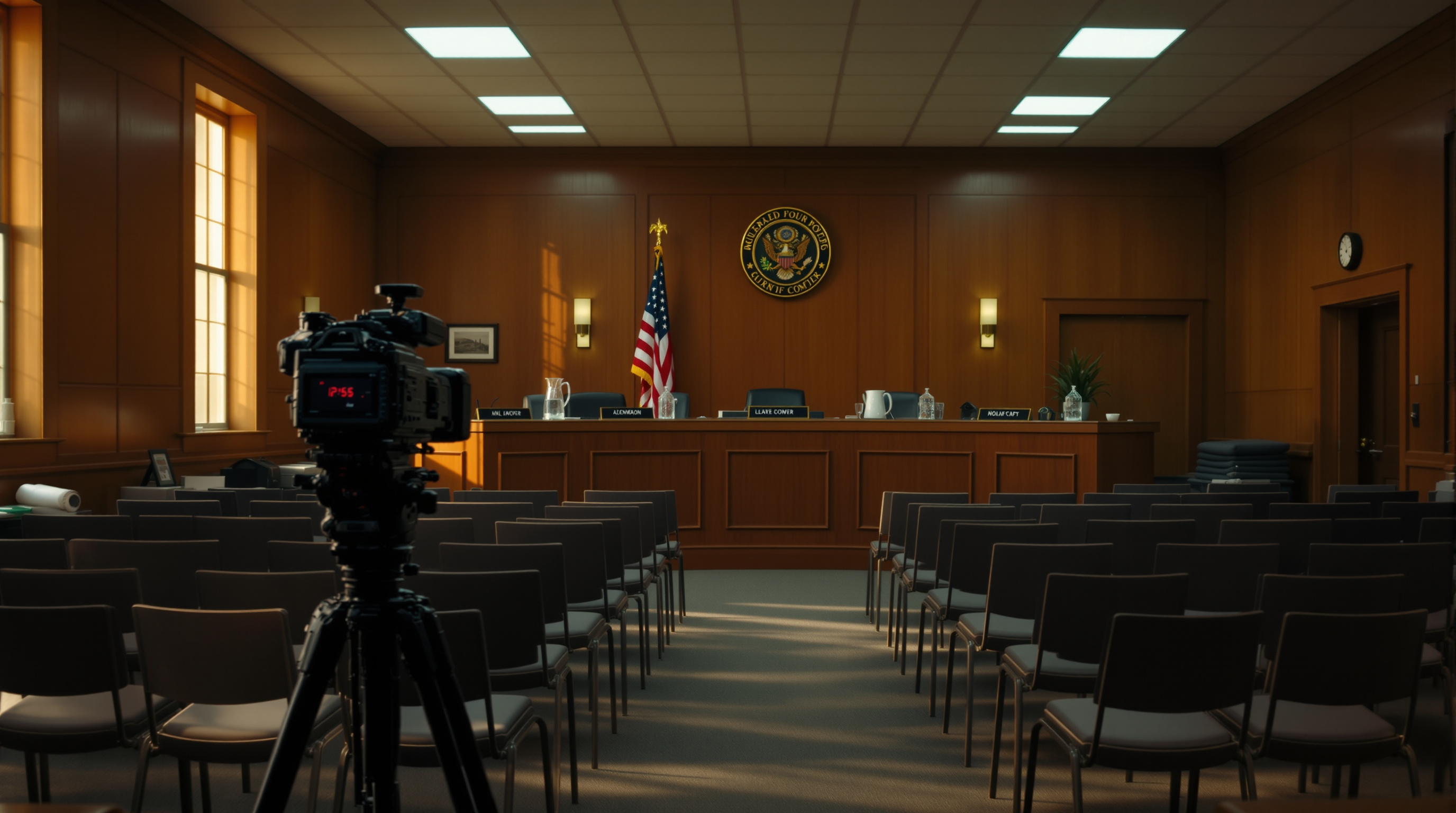
Water districts and school boards vote on real budgets, but the video record often disappears in 90 days. What a permanent civic archive actually needs.
A local school board votes 4-3 to change the district's book review policy. Two parents show up in person. The meeting is on Facebook Live and the comment thread is mostly empty. Ninety days later, the video is gone.
The board didn't do anything wrong. The district followed its retention schedule. But something did go missing — the record of the moment when a decision that will get argued about for a year got made. Now the argument runs on hearsay and second-hand accounts, and the actual video isn't around to settle anything.
This is the pattern that keeps repeating in small civic bodies. Water districts, park commissions, library trustees, town councils, small school boards. Meetings happen, votes are cast, policy shifts. The recording — if there is one — lives on a third-party platform under whatever retention rule the district happened to pick, and often gets deleted long before anyone realizes they need it.
The transparency laws are catching up unevenly
Indiana now requires every school board, county, city, town, and township to livestream meetings and archive them online within seven days. Colorado passed something similar in 2024 — public bodies have to offer real-time video access and keep it available for people who couldn't attend live. Vermont added an electronic posting requirement in a 2024 open meetings amendment.
Arizona is at the other end. A recent investigation by KJZZ found school boards there routinely follow the state's minimum: three months of retention, then delete. Some boards don't record at all. Others record but keep the file locked on a laptop somewhere until the next election cycle.
If you sit on a small board, the real question isn't whether your state will eventually catch up to Indiana. It's whether you want to figure out streaming and archiving on your own terms, or wait for a mandate and have three months to solve it.
Why "just put it on Facebook Live" quietly stops working
Most small boards that stream at all use Facebook or YouTube. Both work great for the first year. Both start creating problems around year two.
Facebook Live archives get buried under algorithmic decisions you can't audit. Someone posts a heated comment during a controversial vote — Facebook might hide it, keep it, delete it, or age-gate it. If your state considers those comments part of the public record, your district is managing public records on a platform that doesn't act like a records custodian.
YouTube introduces a different problem. Meetings often include ceremonial audio — the Pledge of Allegiance, a school choir performance, an invocation with instrumental accompaniment, sometimes a snippet of a local band during a proclamation. YouTube's ContentID system flags copyrighted audio inside longer videos and mutes those sections automatically. A parent watching the recording later hears silence during moments that were audible in the room. That is not a great look for transparency, and there is no way for a district AV volunteer to reliably prevent it.
And the archive itself is at the mercy of the platform. Norwin School District in Pennsylvania recently lost every livestream recording from before 2025 when its old platform reorganized. Elmwood Park District 401 in Illinois announced it would stop maintaining a public video archive entirely. Neither district did anything wrong — the platform just changed.
What a real civic archive actually needs
Three properties, in this order.
Permanence you control. The archive should live somewhere that does not get restructured out from under you. If someone requests a five-year-old zoning board vote, you want to hand them the file, not a broken YouTube link and an apology.
No algorithmic middleman. Public meetings are boring, and that is the point. They do not need engagement optimization. They do not need to compete with cat videos for a spot in someone's feed. A civic streaming app that residents open when they want to watch a meeting — and only when they want to — is a better fit than a general-purpose social platform.
Your own name on it. "City of Millbrook Public Meetings" is a different piece of infrastructure than "the City of Millbrook YouTube channel." Residents open the first one because they trust the city. They open the second one and immediately get suggested next-videos from whoever the algorithm thinks is relevant that week.
The tech reality for a 300-person town
Small civic bodies usually do not have IT staff. They have a clerk who also handles minutes, or a volunteer who also runs the AV setup at the fire hall, or a part-time communications person who splits time between three departments. Any solution that assumes a paid developer to launch is a non-starter.
That is where the branded streaming app model fits civic surprisingly well. Platforms like Fluger let a small town or district publish its own Roku and iOS app under its own name without going through the Apple Developer program itself. Meetings can be livestreamed, archived permanently as VOD, and organized into a 24/7 replay channel that keeps recent meetings running in a loop for anyone who wants context on what got decided last week. Because it is not YouTube, there is no ContentID muting the Pledge of Allegiance. Because it is not Facebook, there is no algorithm deciding whether a controversial vote gets amplified or buried.
The setup cost is not zero, but it is not developer-scale either. And the ongoing operational load — upload the meeting, keep it organized, done — is close to the workload the clerk is already doing with the minutes.
The vote that gets argued about later
If you are on a small board, you already know which meetings will get quoted a year from now. Budget votes. Boundary changes. Book policies. Zoning decisions. Rate increases. The meetings where nobody shows up in person are often the ones that get contested most fiercely in retrospect.
Those are the meetings where the video record matters most. And under most small-board setups today, those are exactly the recordings that get lost first.
You can start solving that now. Fluger has a 14-day free trial at fluger.tv/registration. Even if the platform is not the right fit, the process of setting one up is a useful forcing function — it will make your district decide what its retention policy should actually be, before the state legislature decides for you.