07/16/2026
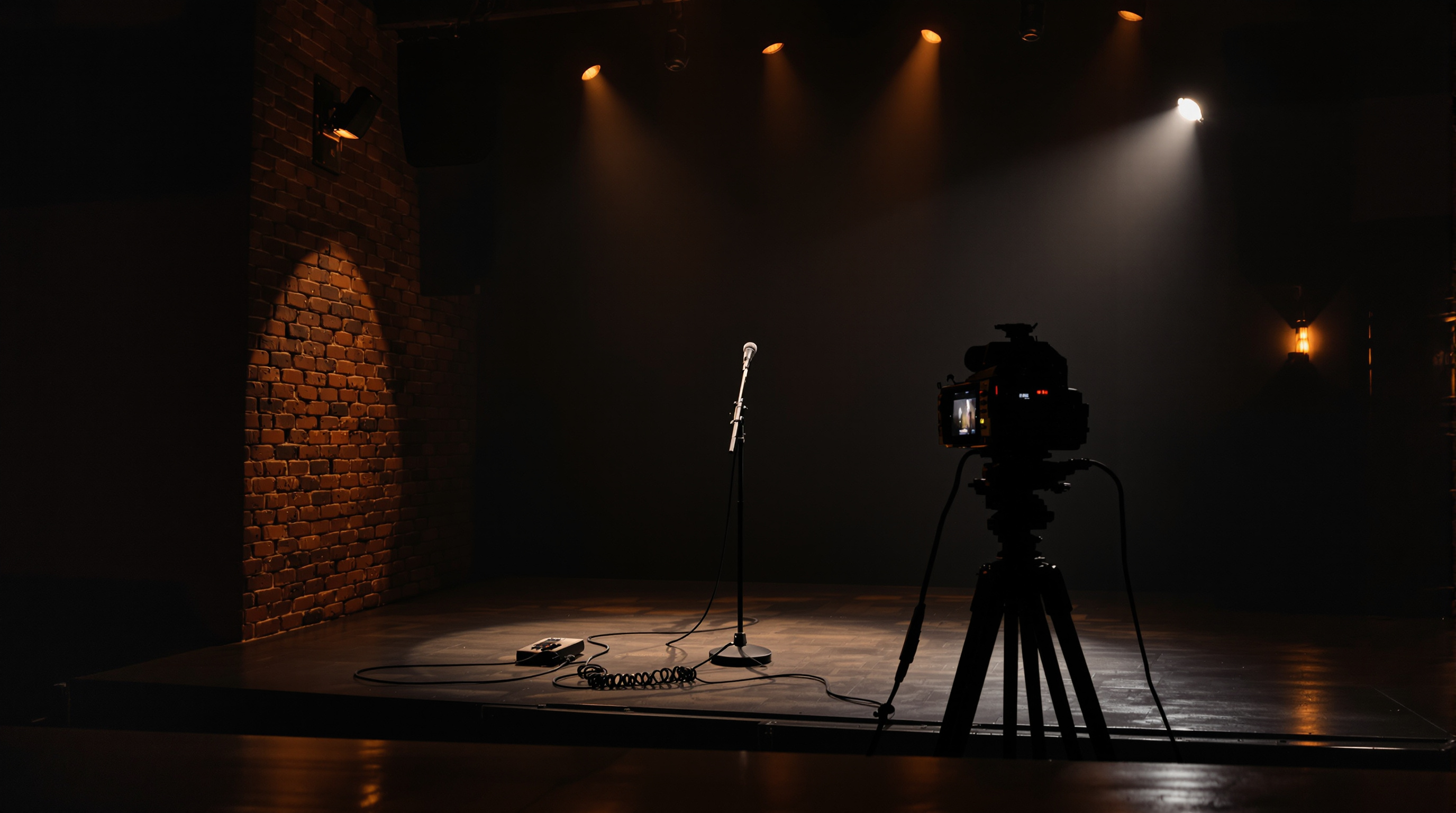
Every small music venue records every show on the soundboard, then never releases any of it. That archive is the raw material for a branded 24/7 channel of your local scene.
Walk into the back room of most small music venues and you'll find a hard drive plugged into a soundboard. Every show that's played through the PA in the last two, three, five years is on it. Multi-track audio, often a fixed camera feed from the balcony. Terabytes of local music history.
Now ask the owner what they do with it.
"Nothing. Bands ask us for their tracks sometimes."
That's the situation at almost every 200- to 800-cap indie venue in the country. The recording gear is standard. The workflow is standard. The archive is real. And the archive is invisible.
Your archive is the second show
The gate money at a music venue is one revenue stream. The bar is another. But the recording — that's a third product you already made and never sold.
Think about what's on that drive:
- A hundred bands playing to your room, mic'd through your PA, mixed by your engineer.
- Rooms full of your crowd. The energy is the venue's energy.
- Songs performed the way the band plays them live, not the way the producer polished them in the studio.
That is content. It's sitting in a folder called SHOWS_2024_ARCHIVE.
The reason it never becomes anything is not artistic. It's logistical. Nobody wants to build a video player, chase band clearances, market a channel, host thousands of hours of files, and split micro-royalties. So the files stay on the drive. Eventually the drive dies.
The three real blockers
Three actual reasons this archive doesn't get released.
Rights. The bands own their performances. They didn't sign a deal that hands the venue distribution rights. Any venue channel has to be opt-in per band, per show. That's fine — but it means you can't just dump the folder online, and most venue owners are not going to send three hundred emails.
Distribution. You can put a video on YouTube, but then you're competing with every other video on YouTube. If a band closes with a cover, YouTube mutes it. If your video underperforms in the first 24 hours, the algorithm buries it. You are hosting valuable footage in an environment that decides who sees it and when.
Discovery. Even if you get the rights and post the file somewhere, nobody wakes up thinking "let me open the venue's YouTube tonight." Venue channels on YouTube average dozens of views per upload. The venue itself has thousands of engaged followers on Instagram. The channel is disconnected from the audience.
Solve those three and you have a product.
What the channel actually looks like
Picture the venue's own app. Its icon sits on the phone next to Instagram, on the TV next to Netflix and Hulu. Open it and here's what you see:
- A 24/7 live linear channel — a continuously scheduled loop of past shows, running like a TV network. Right now it's playing a Wednesday night from March: a three-band bill, headliner mid-set. In an hour it flips to a Friday show from last summer.
- On-demand. Every band that opted in has a page. Their sets. Their promo photos. A link to buy tickets to their next show at your venue.
- Live. When there's a show tonight and the band is up for it, the app streams live. Same PA feed the archive uses.
That's a real product. The linear channel gives it a heartbeat — something is always on. The on-demand library gives each band a home. The live feed turns any given Tuesday into an event people can tune into from their couch three cities over.
The venue becomes the discovery layer for its own scene. Fans of the headliner watch the archive, find the opener, come to next Tuesday's show. Bands promote the channel because it drives their own audience.
The scheduling trick most venues miss
The 24/7 channel is not the same product as the on-demand library. On-demand assumes you know what you want to watch. The 24/7 channel is what you leave on in the background — at the bar, at home, in the tattoo shop across the street.
Fill it with themes. "Local Punk Week" — pull every hardcore show from the archive, loop it. "Album Release Fridays" — play the release show for a band's new record on the same night the record drops. "Rewind" — go back to a specific year, run those shows in order.
Scheduled programming is what makes a channel feel alive. Nobody has to check it. It's just on.
An honest caveat: not every recording on that drive is release-ready. Some nights the vocal mic was hot. Some nights the crowd was thin and you can hear it. Curation matters. Start with the twenty best shows on the drive, not all five hundred. The rest can wait.
Where Fluger fits
This is a Fluger use case in the exact sense the platform was built for. A branded app under your venue's own name — not our name and not a shared streaming service. No Apple Developer account required to publish to iOS. No ContentID system muting your live audio when a band covers a Nirvana song for the encore. A 24/7 linear channel schedule you control alongside VOD and live.
Small venues can spin one up on the 14-day free trial, get an initial 24/7 loop programmed, and go live with a handful of opted-in bands over a weekend.
The archive dies otherwise
That hard drive under the soundboard is a bookkeeping problem right now. It's costing you nothing and earning you nothing. But three years from now, when the drive gives out and you find out none of it was backed up, you will have lost a large chunk of your venue's history — and every band who played there will have lost theirs too.
Or, before that happens, you can turn it into the thing your venue actually is: the local scene's discovery layer, wearing your name.
Publish it.